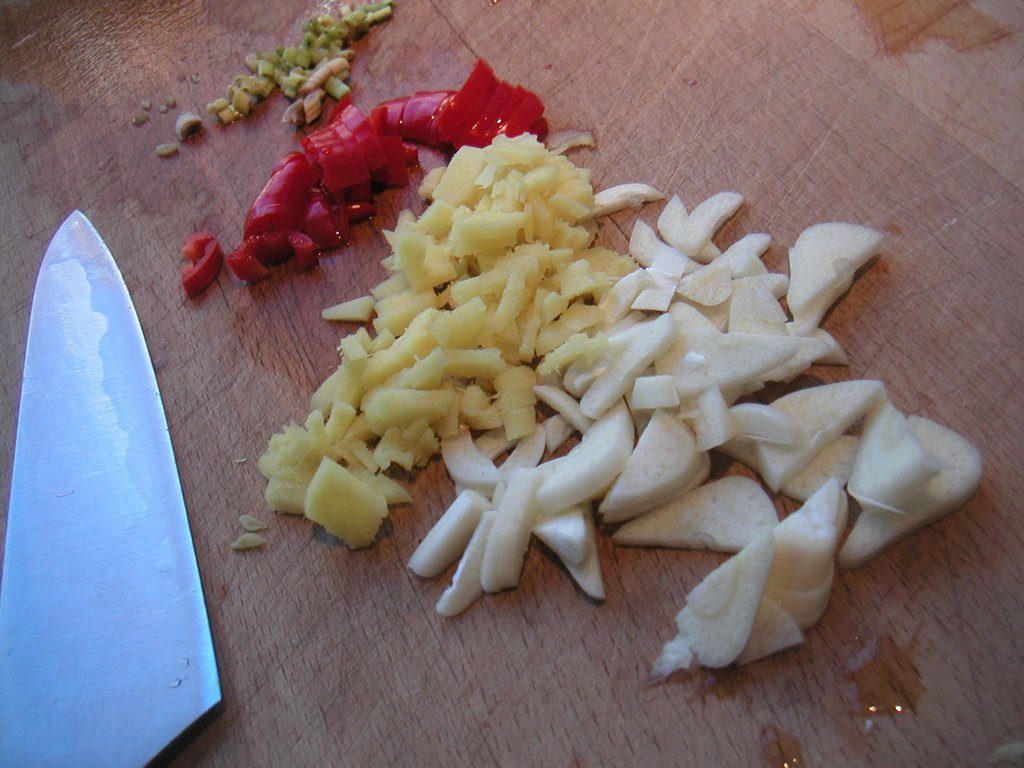
Many kitchen accidents come not from sharp knives but from dull ones, because a dull blade forces you to press hard and slip easily. A sharp knife, by contrast, cuts cleanly and gives you better control.
This piece covers the basics: how to hold a knife properly, keep it sharp, and choose and care for a board. You don’t need an expensive knife set, just the skill to use and maintain what you already have.
Holding the Knife and Your Hands Right
Grip the handle right up against the blade, pinching the spine between thumb and forefinger while the other fingers wrap the handle. This grip gives far more control than gripping the very end with your whole fist.
The hand holding the food curls its fingertips under in a claw, letting your knuckles guide the blade instead of leaving fingertips exposed. It feels odd at first but soon becomes safer and faster.
Keeping the Blade Sharp
Before each use, run the knife along a honing steel a few strokes per side to realign the edge. This doesn’t grind away steel, it just straightens the edge that bends during use.
Every few months, depending on how often you cook, sharpen the blade on a whetstone or take it to a shop. A regularly tended knife lasts longer and always gives a clean cut.
Choosing a Board for the Job
Wood and plastic boards each have their merits: wood is gentle on the blade and ages beautifully, plastic washes easily and can go in the dishwasher. Keep at least two, one for raw items and one for cooked food or vegetables.
Avoid glass or stone boards because they dull knives fast. Whichever you choose, lay a damp cloth underneath so the board won’t slide as you cut.
Cleaning to Avoid Cross-Contamination
Raw items like meat and fish and ready-to-eat foods like salad greens should use separate boards to keep bacteria from spreading between them. With only one board, cut vegetables first, then meat, and wash it thoroughly after.
Wash boards with hot soapy water and stand them on edge to dry fully on both sides. Don’t soak wooden boards or put them in the dishwasher, as they crack and warp easily.
Storing Knives and Boards to Last
Don’t toss knives into a drawer with other tools, as the clashing blades chip and dull. Use a wall magnet, a knife block, or blade guards to keep them safe.
Rub a wooden board with a food-safe board oil now and then so it doesn’t dry and crack. With a little care, this pair will see you through a great many meals.
Cooking becomes lighter when a sharp knife and a steady board are within reach. These are foundational skills worth investing time in, because you’ll use them every day for years to come.