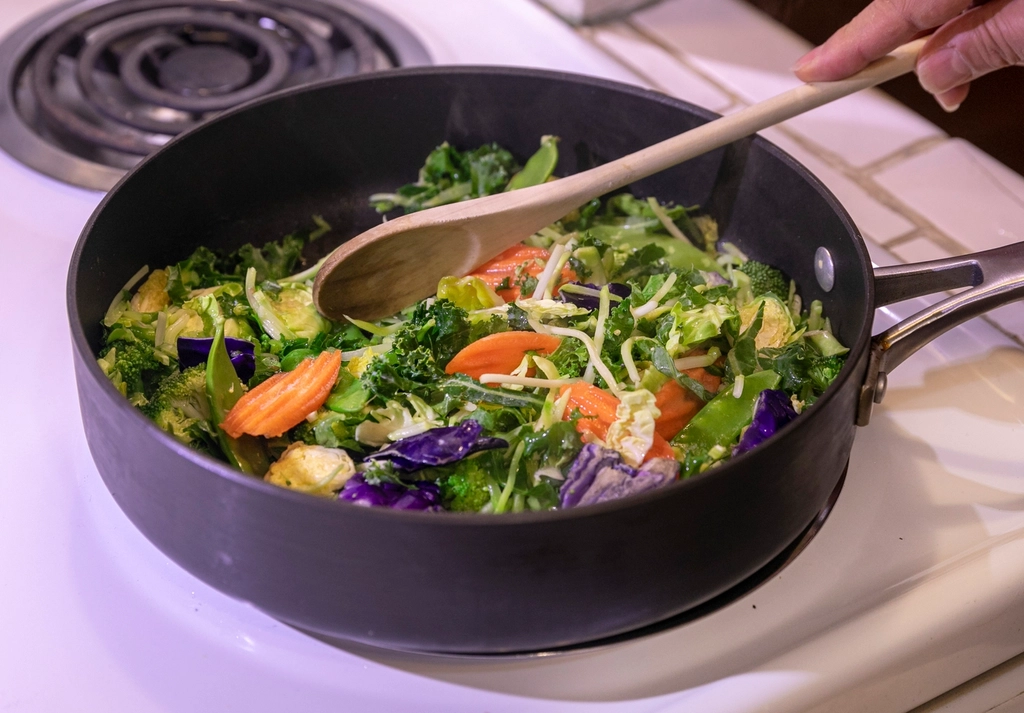
Fried and stir-fried dishes are always tempting with their crisp, fragrant appeal, but all that oil makes us wary about our health and the heavy feeling afterward. The good news is that you can absolutely cook these dishes with a moderate amount of oil and still keep them delicious.
The secret lies in choosing the right tools, controlling the heat and understanding the nature of each ingredient. Once you master a few small tricks, your meals will feel lighter without sacrificing any flavor.
Choosing the Pan and Heating It Properly
A good non-stick pan is your best ally when cooking with less oil, because the food doesn’t stick to the bottom, so a little oil is all you need. If you use a regular pan, make sure to heat it thoroughly before adding the oil so the food sticks less.
The key rule is to heat the pan first, then add the oil, and only then add the ingredients. A pan that’s hot enough sears the surface of the food quickly, forming a crisp crust that absorbs less oil. Many people put oil into a cold pan and only then turn on the heat, which makes the food soak up oil and turn greasy.
Controlling the Heat So Food Crisps Without Burning
Heat is the crucial factor when frying and stir-frying. Stir-fries usually need high heat and quick hands so the vegetables stay crisp and green without releasing water. Frying, on the other hand, needs moderate heat so the inside cooks through while the outside has time to turn golden and crisp.
With heat too low, the food releases water and soaks up oil, turning soft and greasy. With heat too high when frying, the outside burns while the inside stays raw. Learning to sense and adjust the heat for each dish is an important skill that lets you cook with less oil and still get great results.
Prepping to Reduce the Oil You Need
How you prep has a big effect on how much oil you use. For dishes usually deep-fried, like tofu or potatoes, you can boil or steam them first and then just pan-sear them to a golden finish, which is both faster and uses less oil. Blanching vegetables before stir-frying also cuts down on the oil needed.
Fatty meat like pork belly can use its own fat: put it in a hot pan so the fat renders out and becomes the oil, instead of adding more from outside. Marinating ingredients with a little oil before stir-frying also helps distribute the oil evenly without pouring a lot into the pan.
Adding Ingredients in the Right Order
Stir-frying in the right order helps food cook evenly and with less oil. Typically you fry the shallots and garlic until fragrant, then add the slower-cooking ingredients like meat and carrots first, and finally the quick-cooking leafy vegetables. That way everything finishes cooking at the same time without having to stir-fry too long.
When stir-frying vegetables, toss quickly and evenly over high heat and season at the end so the vegetables don’t release water. If the pan looks dry, instead of adding oil you can add a splash of water to keep tossing, a method known as wet stir-frying, which cuts the oil considerably while the vegetables still cook through and soften.
Handling Excess Oil and Smart Substitutions
After frying, rest the food on paper towels for a few minutes to soak up the oil clinging to the surface, and the dish will feel noticeably less greasy. Using an oil sprayer is another good way to control the amount, just misting a thin layer onto the pan or the ingredients.
Alternative cooking methods are also worth trying, such as roasting in an air fryer for crisp dishes that need almost no oil. That said, don’t go to extremes and cut out oil entirely, because some healthy fat is still necessary. What matters is using just enough, the right way.
Choosing Your Oil and Keeping It From Scorching
When frying and stir-frying, the type of oil also affects both health and flavor. For dishes that need high heat, choose an oil with a high heat tolerance so it doesn’t break down and give off a scorched smell. Oil heated past its smoking point not only loses flavor but is also bad for your health.
Don’t reuse frying oil many times, because oil taken to high temperatures over and over turns dark, smells off and produces harmful compounds. If clean oil is left after frying, you can strain it and reuse it once for a stir-fry, but don’t overdo it. Using just the right amount of oil from the start is also a way to avoid dealing with leftover oil, saving money while staying healthy.
Cooking with less oil doesn’t mean eating bland food. Once you understand your pan, your heat and how to prep, you can still make fragrant, delicious fried and stir-fried dishes that are gentler on the body.
Try applying a few of these tips to tonight’s stir-fry, starting with heating the pan thoroughly and using high heat. A delicious meal that doesn’t sit heavy is well within your reach.