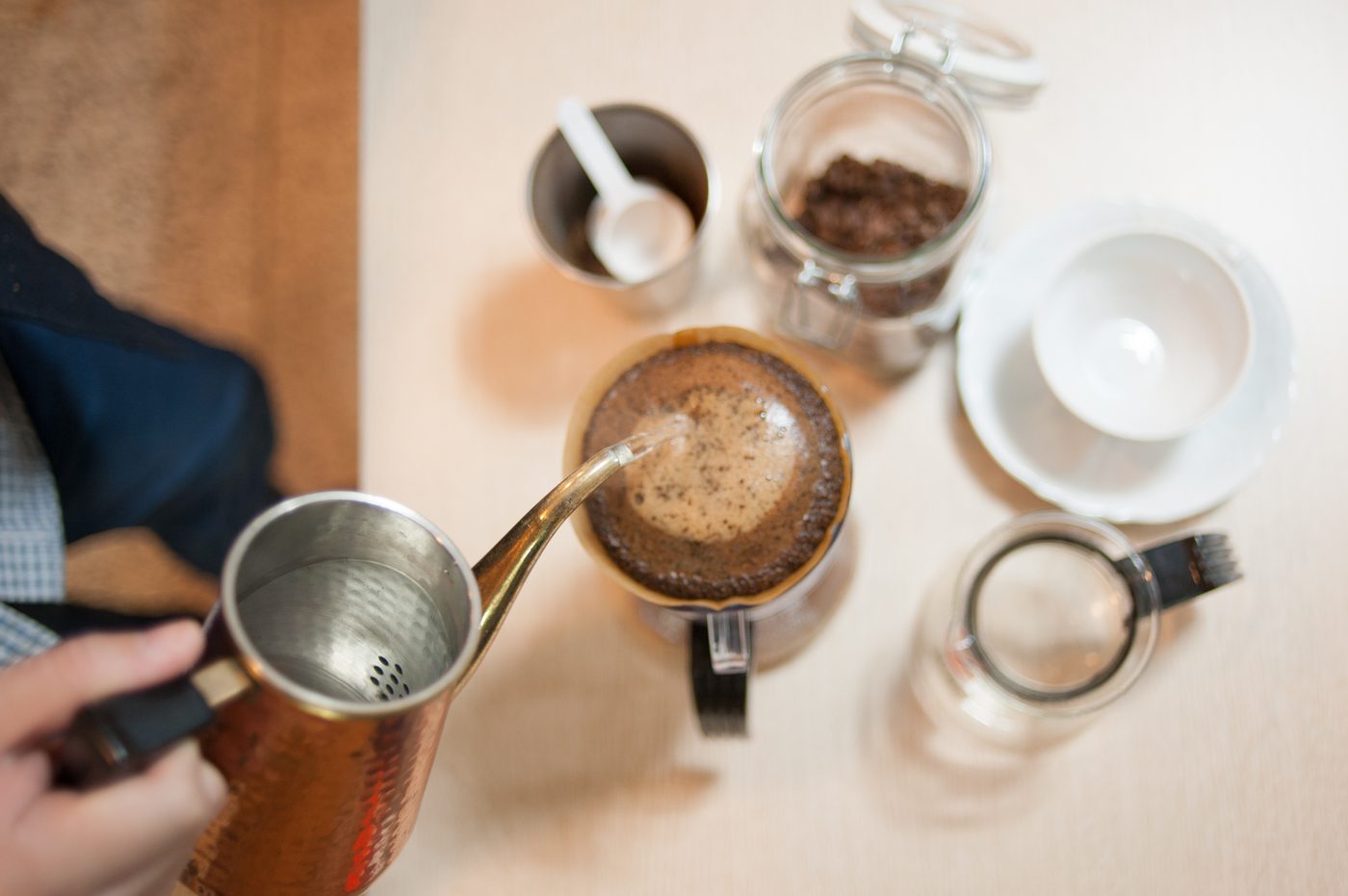
Slowly pouring circles of water over a bed of coffee grounds is a lovely little morning ritual. Pour-over coffee gives a clear cup that lifts up aromas a machine struggles to reach.
You don’t need pricey gear or a barista’s technique. Grasp a few principles about ratio, grind, and pouring, and your homemade cup will taste better than you expect.
The Minimum Gear You Need
You need a dripper, filters to fit it, a carafe or cup to catch the brew, and ideally a gooseneck kettle for slow pouring. If you don’t have a gooseneck yet, a jug with a small spout will do for now.
A kitchen scale helps you weigh grounds and water precisely, but measuring spoons work fine at first. Don’t let missing gear stop you from starting.
An Easy Ratio to Remember
An easy ratio to follow is 1 part coffee to 16 parts water, roughly 15 grams of grounds to 240 ml of water. From there you adjust up or down to find the strength you like.
For a stronger cup, add grounds rather than cutting water, since less water tends to make it bitter. Note the ratio you love so you can repeat it reliably.
Grind Size and the Right Water Temperature
Pour-over grounds should be about the size of coarse sand, not too fine or the water runs slow and turns bitter. If you buy pre-ground coffee, choose one labeled for filter or pour-over.
Let boiling water cool for about half a minute, to roughly 92 to 96 degrees Celsius, the sweet spot for extraction. Water at a rolling boil poured straight on can scorch the coffee and make it harsh.
How to Pour, Step by Step
First pour just enough water to wet all the grounds, then wait thirty seconds, called the bloom, to let gas escape and the grounds swell evenly. This step makes for far more even extraction.
Then pour in small circles from the center outward, in a few stages, keeping the water level steady. The whole thing should take about two to three minutes for a good result.
Adjusting to the Cup You Just Made
If the cup is sharply sour and thin, the water may have run too fast, so grind finer or pour more slowly. If it’s bitter and drying, do the opposite: grind coarser or lower the water temperature.
Change only one variable at a time and taste again, and you’ll slowly learn your own palate. Pour-over is a small game that grows more fun the more you play.
Brewing coffee by hand is a way to start the day with intention, slowing down for one beat amid the rush. After a few sessions you’ll have your own recipe and a morning cup that makes you smile.