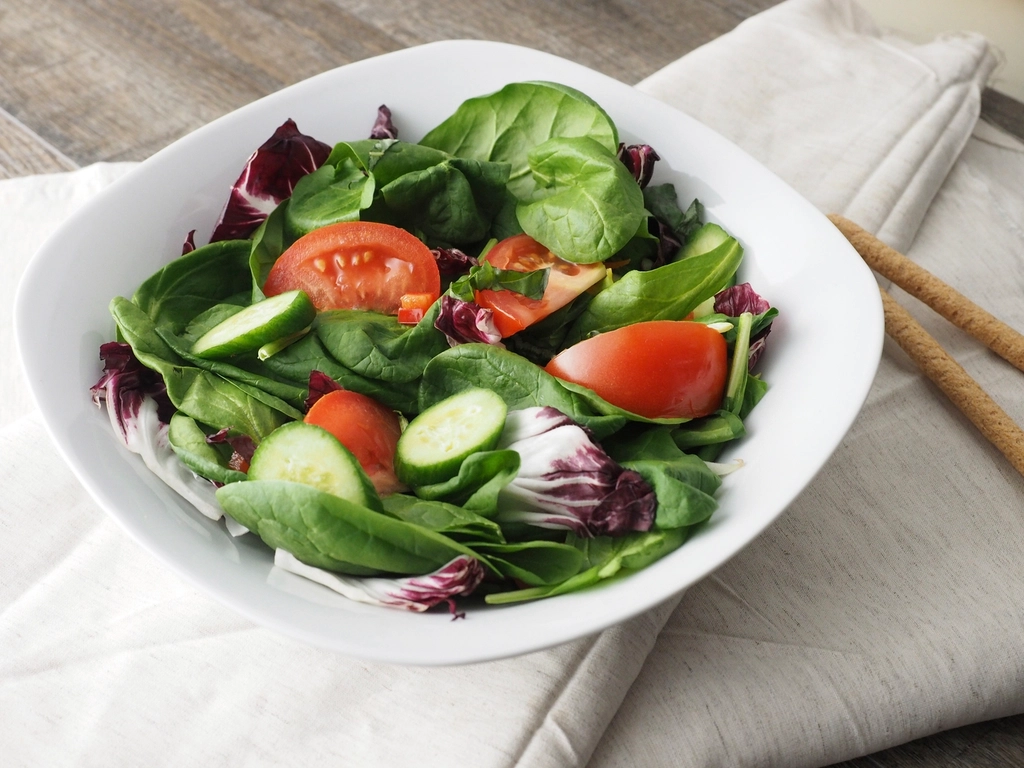
Many people think of salad as a dull diet dish, all bland greens. In fact, a well-made salad can be delicious, filling and beautiful at once, perfect for a light meal or as a side to a main course.
The secret to a good salad lies in balance: among the ingredients, among the sour, sweet, salty and rich flavors, and among the different textures of crisp and soft. Once you understand the general formula, you can invent countless salads from whatever you have in the fridge.
Choose a Fresh, Crisp Base of Greens
The greens are the foundation of a salad. Various lettuces, baby spinach, arugula, or simply cabbage and Peruvian watercress all work well. Choose greens that are truly fresh, with no bruised or wilted leaves, wash them clean and drain them thoroughly before tossing.
Greens still holding water will dilute the dressing and make the salad go soggy quickly. After washing, you can use a clean cloth or a salad spinner to dry the greens. In a salad, the fresh crispness of the greens is a key element in making it enjoyable.
Add Color and Crunch
An appealing salad needs plenty of color and texture. Red cherry tomatoes, orange carrots, green cucumber and yellow bell peppers not only look beautiful but also add a variety of nutrients. Fruits like apple, mango and pear, thinly sliced, bring a fresh sweet-and-sour note.
For an interesting crunch, add nuts like cashews, walnuts or almonds, or a few crisp croutons. These small touches create textural highlights so that every bite of salad is anything but monotonous. Skillfully combining color and crunch is what makes a salad appealing.
Add Protein to Make the Salad Filling
To turn a salad into a satisfying meal rather than just a side, you need to add a source of protein. Pan-seared chicken breast, boiled shrimp, boiled eggs, tuna, or tofu and legumes for vegetarians are all good choices. The protein keeps you full longer and balances the nutrition.
In addition, adding some healthy starch like sweet potato, quinoa or whole-wheat pasta also turns the salad into a complete meal. With the combination of greens, protein and starch, the salad is no longer a boring diet dish but a full and delicious meal.
Mix a Well-Balanced Dressing
The dressing is the soul of a salad. The basic formula is an oil part and a sour part, usually in a ratio of about three parts olive oil to one part vinegar or lime juice, plus a little salt, pepper and honey to balance it out. This is a classic dressing that’s easy to make.
You can also make a Vietnamese-style dressing with sweet-and-sour fish sauce, garlic and chili for a salad, or a rich, nutty toasted-sesame dressing. The general principle is to balance sourness, sweetness, saltiness and a touch of richness. Toss the dressing in right before eating so the greens don’t go soft and mushy.
Toss and Enjoy at the Right Moment
Timing the toss is very important. Salad is best when tossed right before eating, while the greens are still crisp and the dressing hasn’t had time to soften them. If you’re preparing ahead, keep the dressing separate and only drizzle it on when serving.
When tossing, drizzle the dressing on gradually and toss gently so every ingredient is coated without getting crushed. Don’t add too much dressing or the salad will turn wet and cloying. A well-tossed salad with just the right amount of dressing keeps its fresh flavor intact.
Storing Salad and Using Up Leftover Ingredients
Salad is best eaten right away, but sometimes you need to prepare ahead. The trick is to keep each part separate: store the greens, the toppings and the dressing apart, and only combine them at mealtime. Greens that have been washed and drained, wrapped in paper towel and placed in an airtight container, will keep their crunch in the fridge.
Salad is also a wonderful way to use up leftover ingredients. A piece of chicken breast left from an earlier meal, a few odd vegetables in the fridge, a handful of nuts or a bit of cheese can all find a place in an improvised salad. Instead of throwing them out, you turn them into a new and interesting meal, saving food while getting creative.
Salad is one of the most flexible dishes of all, letting you be as creative as you like with whatever’s on hand. Once you understand the principle of balance, you’ll never find salad boring again.
Try making a salad for a light lunch, pairing greens with some protein and a dressing you mix yourself. It’s a simple way to eat more vegetables while still finding the meal tasty and satisfying.